Spices


Horseradish chopped

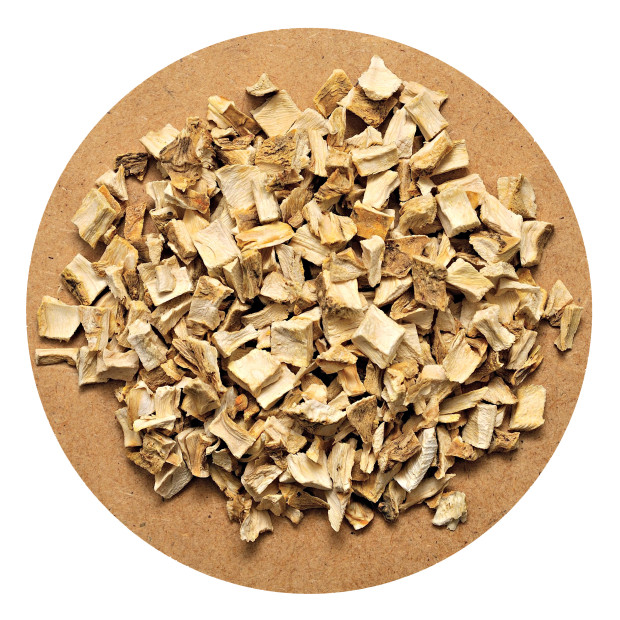


Horseradish - a perennial, popular garden plant belonging to the Cabbage family. The stems of the plant can reach up to 1.5 meters in height. The leaves are oval and have a large root that is large.
Horseradish is a common plant throughout Europe, as well as in Asia.
The chemical composition of the plant is quite wide. Horseradish contains proteins, carbohydrates, dietary fiber, B vitamins, vitamin C, E, PP, macronutrients, trace elements, and more. The caloric content of horseradish is 59 kcalories per 100 grams of product.
Since ancient times, people use horseradish in cooking, as well as for medicinal purposes.
Fresh leaves go well with many foods, especially cold soups, okroshka, mycelium.
Similarly, the leaves are an indispensable ingredient in pickling vegetables: tomatoes, zucchini, cucumbers, etc.
From the root of the plant prepare a traditional seasoning that gives dishes a sharp taste. Horseradish root goes well with vegetable salads and snacks.
In addition to the fact that horseradish has an interesting, spicy taste, it is also a very useful plant. Its useful properties have long been known in folk medicine, and today are increasingly used in medical practice.
Useful properties of the plant
- Horseradish has a bactericidal, diuretic, choleretic and antiseptic effect on the body.
- Horseradish increases appetite, stimulates digestion.
- The product has a positive effect on the kidneys and liver.
- Horseradish is used in the treatment of arthritis, gout, radiculitis.
- The plant helps with colds, flu, sore throat. Rinse your throat with its decoction, and mixed horseradish with honey helps with cough.
- With inflamed gums, gum disease or toothache, it is recommended to rinse your mouth with a decoction of horseradish leaves.
- Horseradish has a positive effect on men's health. Enhances potency, is used in urological diseases, as well as an aphrodisiac.
- Horseradish is a prophylactic against the risk of metastasis.
- The plant is used for ear diseases, inflammation, suppuration.
- The benefits of horseradish also extend to human skin. It copes well with purulent wounds, fungal diseases, frostbite.
Contraindications to the use of horseradish
The plant has the ability to irritate the mucous membrane. Therefore, in large doses you can get burns.
Horseradish is forbidden for gastritis, ulcers, colitis, pancreatitis.
The plant is not recommended for pregnant women, children, as well as intolerance.
You can buy crushed horseradish of excellent quality in our online store.
Horseradish can be bought at retail from 100 grams, as well as wholesale from 2 kilograms.